Our mission
Film looks true to every skin.
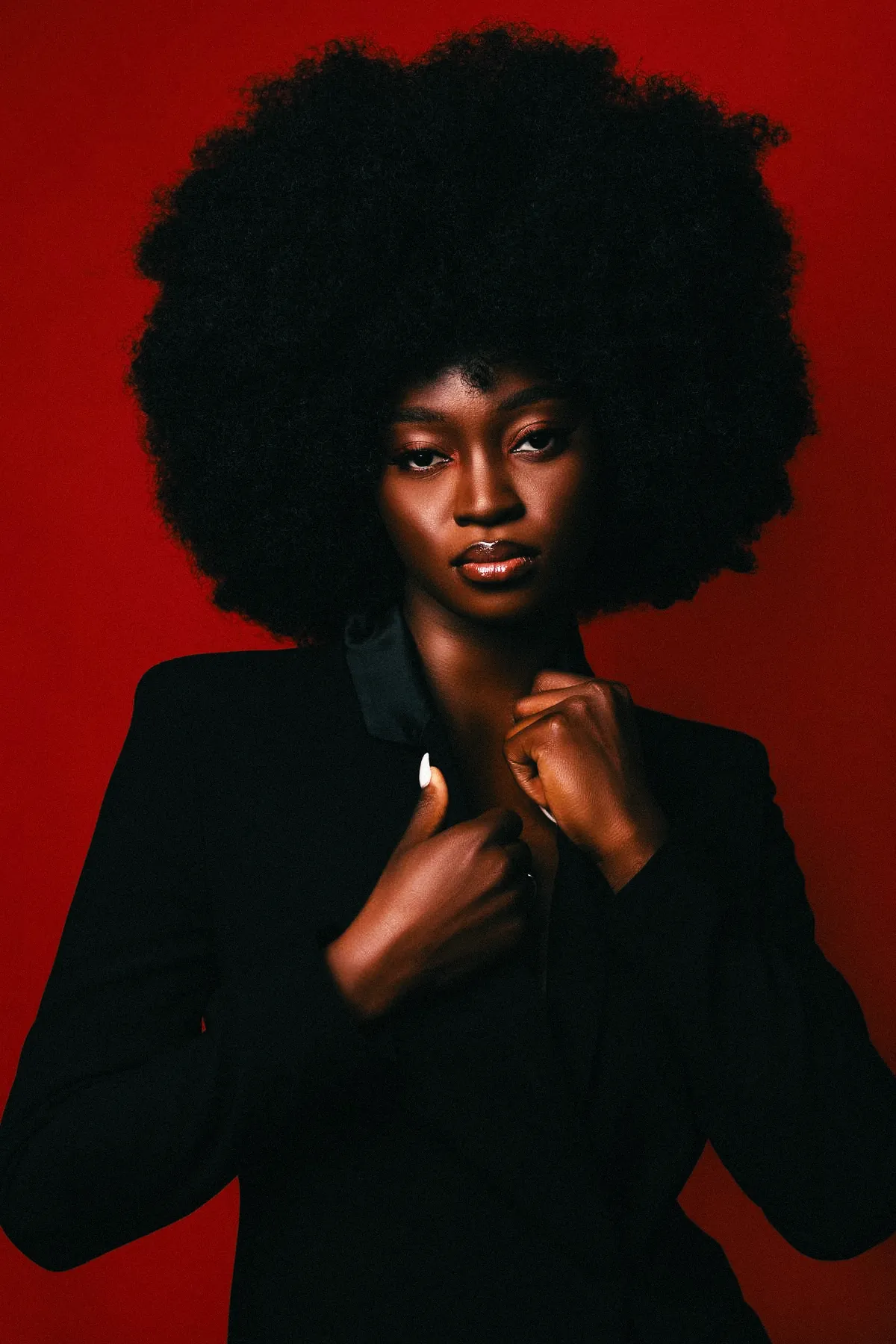
For most of photography's history, the camera was tuned for one kind of face. Lumalook exists so that every face, and deep skin above all, comes out rich, detailed and true to life.
Too many of us have watched a filter flatter everyone in the frame but us. Grey where we should glow. Orange where we should be brown. Lost in shadow where we should be seen. We decided to build the app we kept looking for.
Where it started
The card that set "normal".
From the 1950s, photo labs across North America calibrated their printers against a card of a smiling white woman. Labs called every version of it "Shirley", after Shirley Page, the Kodak employee on one of the first. Get her skin right, and the print was judged right.
- 1950s
Shirley becomes the standard
Kodak ships reference cards and negatives to labs. Her skin is the target every print is balanced to.
- 1950s and 60s
Parents notice
As American schools integrate, Black children's faces print as dark shapes in class photos while their white classmates look overexposed.
- 1960s and 70s
Chocolate gets a fix first
Kodak widens the range of browns in its film after chocolate and furniture advertisers complain they can't tell dark from milk, or walnut from oak.
- Mid 1990s
A multiracial Shirley
Kodak prints its first reference card with Black, Asian and white models together, decades after the problem was known.
- Today
The defaults linger
Many filters still crush deep skin to black or wash it ashy. We found it in our own looks too, and rebuilt our engine until 123 of 128 kept skin true.
It was never black flesh that was addressed as a serious problem at the time.Earl Kage, former manager of Kodak Research Studios, quoted in Lorna Roth's research
Sources: Lorna Roth, "Looking at Shirley, the Ultimate Norm", Canadian Journal of Communication, 2009; 99% Invisible, "Shirley Cards", 2021.
What we believe
Start from deep skin. Everyone benefits.
A look that keeps the deepest skin rich and detailed handles every other complexion with ease. So that's where we begin, every time.
Rich, never ashy.
No grey veil, no orange cast, no lightening. Deep skin keeps its depth, its colour and the sheen that makes it look alive.
Tested on all ten tones.
Every look is checked across the full Monk Skin Tone Scale and under hard light, neon and night before it ships.
Built with you.
Our Founding Creators test every build and have a real say in what we make next. If a look gets you wrong, it gets fixed.
Who we are
Made in London by Emotive Impact.
Lumalook is made by Emotive Impact, an independent studio in London building tools for creators who have been an afterthought for too long.
[Founder note: a few lines from Edem on why you started Lumalook, in your own words. We'll put your name and photo here once you've written it.]
No ads and no tracking. We earn our money from the app itself, so the people we work for are the people who use it.
Help us get it right.
Shoot with Lumalook before anyone else and tell us where it still falls short, or bring your organisation on board.